Trimaster
1/48 Focke Wulf Ta 152 V7
Ta 152 V7 (C-0 built to C-1/R11spec) was the
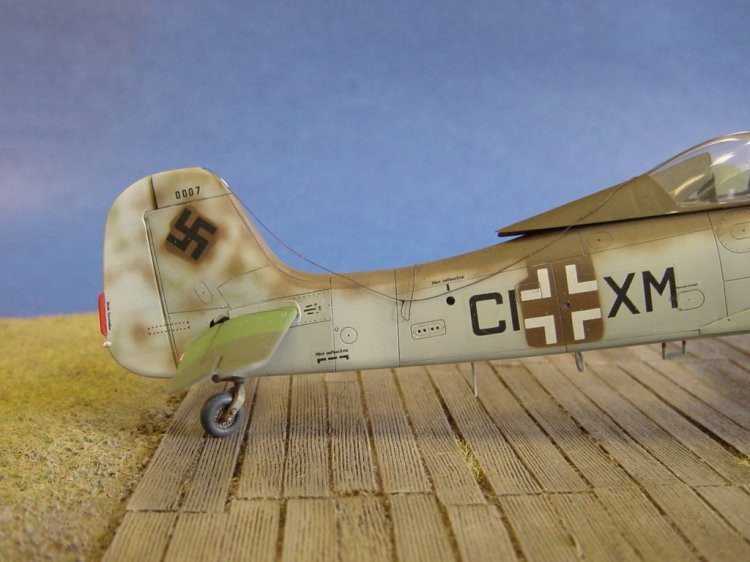
second Ta 152C prototype built. "CI + XM" first flew on the 8th of January
1945, but this model depicts this aircraft during flight trials which commenced
at Langenhagen, Germany, on 10 March, 1945.
Construction
and Modifications:
The
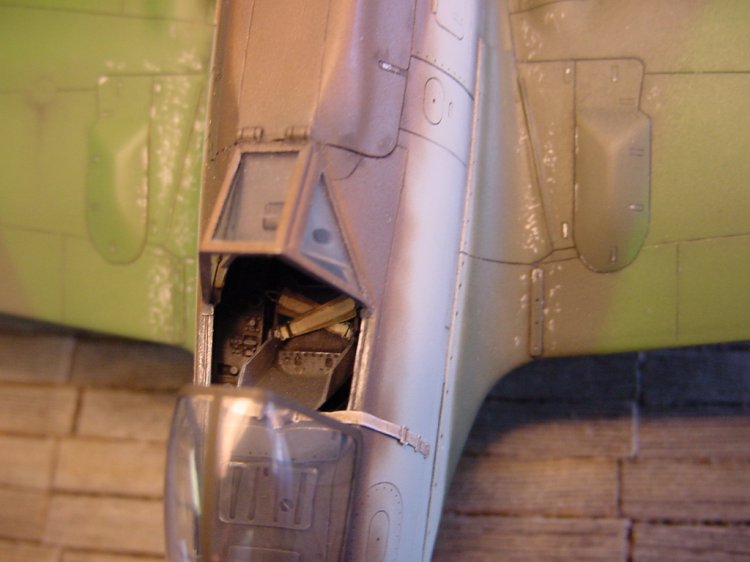
cockpit was detailed using Eduard’s Ta 152H set with the assorted knobs being
made from blobs of white glue. The only modification required to the instrument
panel was the removal of the cockpit pressurisation gauge.
The
fit of the resin replacement nose to the fuselage was poor requiring a shim
forward of the MG 151 gun cover. The hinges for the port side engine access
cover was poorly moulded so was sanded off and replaced with hinges made from
plastic rod embedded in a trough I scribed into the cowling. The resin air
intake had to be hollowed out as well.
The
resin wings that came with this kit fit well but had such poor panel lines
(troughs, actually) that after an hour or so of restorative efforts were
scrapped. Fortunately, the kit includes the original plastic Ta 152H wings and
it was less work to shorten these to those required for the C model. The
wingspan for the Ta 152C is slightly longer than that for the Fw-190D-9 so it is
not possible to swap wings from a D-9 kit. Shortening the wings required about
50% of the upper wing and 90% of the lower wing panel lines to be filled and
re-scribed. Only the wing tips were salvaged from the kit’s resin wings, the
navigation lights being kit items tinted with Tamiya transparent red and green.
Finally,
all control surfaces were replaced with KMC resin items, some plumbing was added
to the wheel wells with copper and lead wire, the tires were bulged, and the
antenna wire was added from fine copper wire.
Colours
and Markings:
This
topic will always be a source of endless debate. The under surfaces
were painted Polly Scale 76 light blue, with the exception of the aft half of
the lower wings which were painted Floquil ‘Old Silver’ and lightly buffed. All
of the references that I have (including the kit instructions) that discuss the
colours and markings of this particular aircraft show slightly different
variations of both the colours and demarcation of the upper surface camouflage.
This
left the decision up to my own photo interpretation as no definitive information
seems to exist as yet. Most sources show the upper fuselage to be painted in a
combination of 81 brown violet and 83 dark green, however, my interpretation of
the photos suggests only one colour was used, with apparent differences in tone
caused by different angles of the different parts of the fuselage to the light
source. This interpretation agrees with Robert Michulec’s book,
Camouflage & Markings 4: Luftwaffe 1935 – 45 Pt. 4,
published by AJ-press. This reference further states
that this colour was 81 brown violet, and that the wings were most likely 82
light green and 83 dark green as per RLM directives, and not the 75/83 interim
scheme as suggested by the other references in my possession. However, the tonal
differences of 75 grey violet and 82 light green are very difficult to
distinguish in WW II black and white photos.
The model was painted
exclusively with Polly Scale acrylics sprayed through an Aztek A470 airbrush.
References:
-
Focke-Wulf Ta 152 The Story of the
Luftwaffe's Late-War, High-Altitude Fighter,
Dietmar Harmann, Schiffer Publications Ltd., 1999.
-
Camouflage
& Markings 4: Luftwaffe 1935 – 45 Pt. 4,
Robert Michulec, AJ-Press, 1998.
-
Aircraft
Monograph 6: Fw 190D & Ta 152, Marian Krzyzan, AJ-Press, 1997.
-
Monogram
Close-Up 24: Ta 152, Jeff Ethell, Monogram Aviation Publications, 1990.
-
Model
Art No. 336 Focke-Wulf Fw 190D & Ta 152,
Model Art Co. Ltd., 1989.
Martin
|
|