|
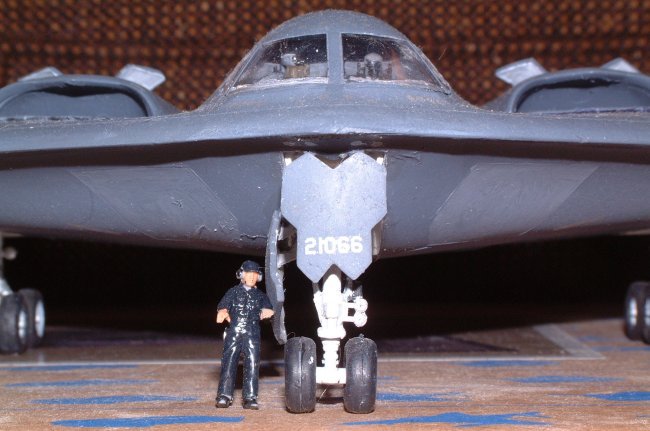
I built this kit
largely OTB, save for some detail work. The sections of the wing were a
pain in the tucus as usual, but the instructions include an alternate procedure
for assembling the wings. Start by gluing the upper wing panels together,
forming the upper half of the wing, while making sure to properly align the
seams. Set the upper wing half aside, upside down on a flat surface and
allow the glue to dry overnight. Repeat the process for the lower half of
the wing. This really should be done first thing out of the box.
Assembly after this point was essentially by the book, except for a few details.
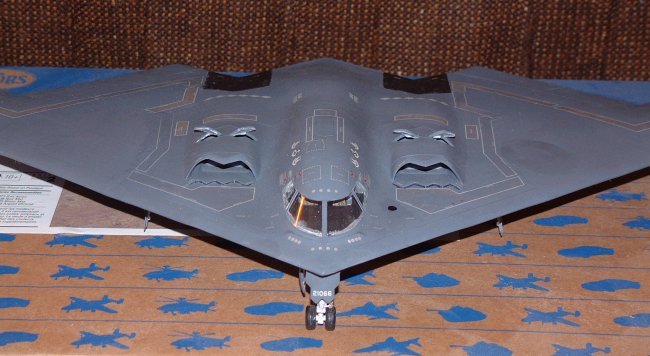
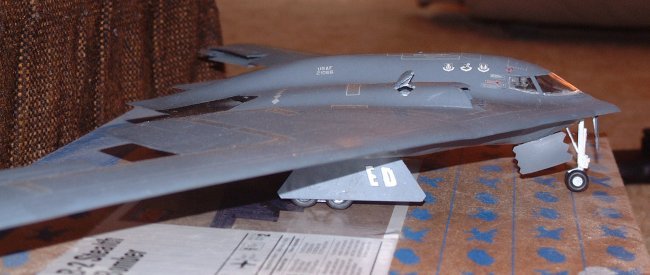
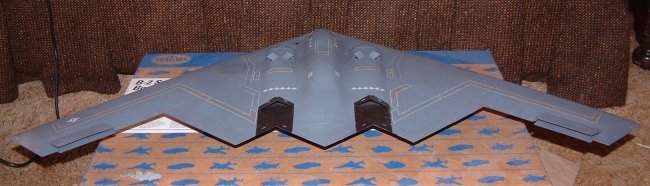
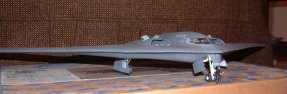
I decided to model my B-2 with gear down and engines running, as on a takeoff
roll. On the real aircraft, under these conditions, the flight control
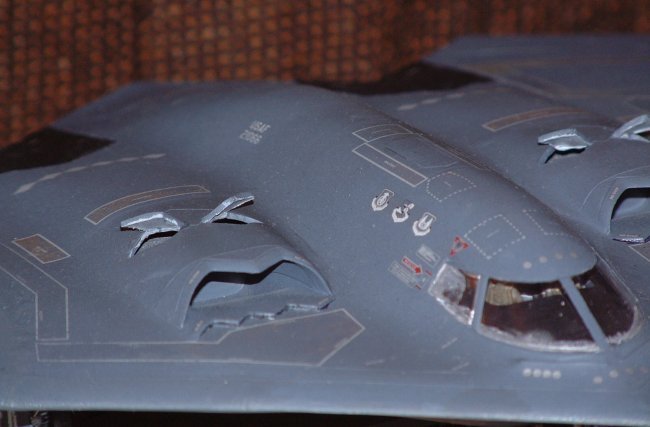
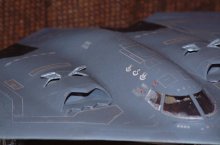
computer deploys auxiliary air intakes on the top of the main intake’s
aerodynamic fairing. These fairings are simply there to smoothly
incorporate the intakes into the skin of the aircraft. They do not, in
fact, house the engines. The engines are completely submerged within the
wing. The same thing goes for the center section that houses the cockpit.
Many say that the bulged center section houses the weapons bays. This is
false. The weapons bays are submerged within the wing in the same manner
as the engines. But anyway, I had to cut out the auxiliary intake doors,
which of course were not scored other than having their outlines in the plastic
pieces that cover the inlets. Getting them cut out cost me two brand new
X-acto™ blades, and a small vocabulary of muttered curses. The other big
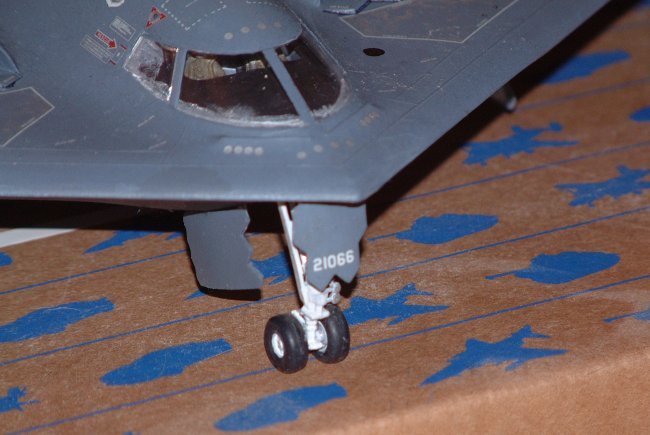
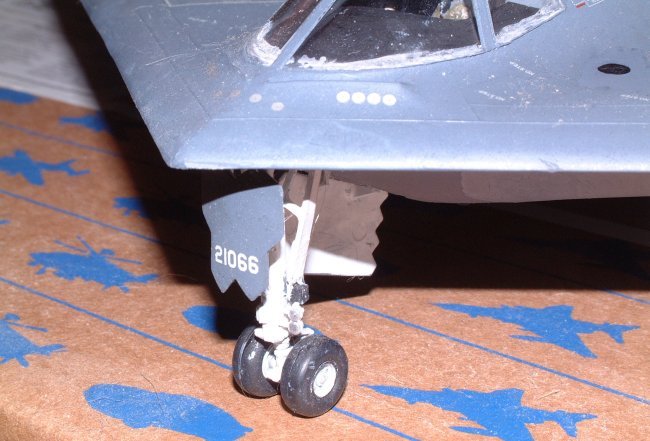
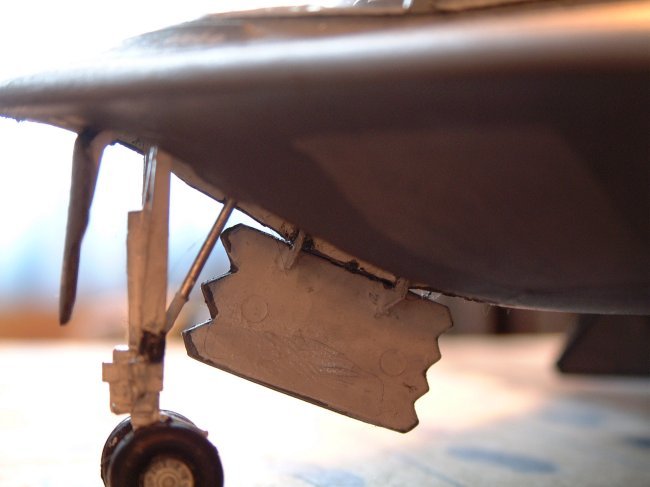
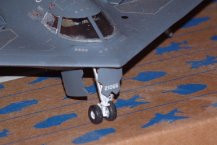
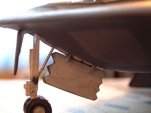
change I made was displaying the nose gear bay door in the open position.
I had to make mounting brackets for the door out of sheet styrene. Also
present beside the left windscreen is the painted-on window for the
auto-tracking sextant included in the B-2’s navigation equipment. One
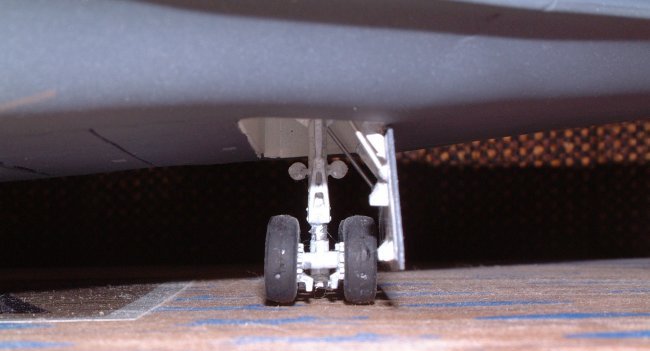
other small detail I decided to add was a small black box on the left side of
the nose gear strut. This box is actually an Alert Aircraft Start Button,
similar to the one on the B-1B. This one button starts all four engines
simultaneously, as well as firing up the navigational equipment. I built
it by clipping off a small piece of sprue, mashing it square in a vise, painting
it flat black, and gluing it onto the nose gear strut. I also included two
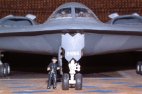
1/72nd scale pilot figures in the cockpit. They came from a Hasegawa
1/72nd scale Air and Ground Crew set.
|
Click on
images below to see larger images
|
|
|
 |

|
The decision to
convert this kit to the Block 30 standard (the kit, if built completely by the
book, represents the original Block 10 aircraft, which is less stealthy and less
capable than the Block 30) was really no decision at all. The differences
are subtle, being primarily in the software, which is more advanced than the
original Block 10 aircraft, and the ability to carry every conventional
air-to-ground munition in the Air Force inventory (the original B-2 was limited
to nuclear free-fall bombs and nuclear cruise missiles). The main external
difference is that the Block 10 Spirit has that nice, black, segmented leading
edge, the sections of which were joined by seams known as “hairpins”.
The leading edge was painted in the same Gunship Gray paint as the rest of the
plane for the interim Block 20 aircraft, and replaced altogether with a single
piece leading edge on the definitive Block 30 B-2. This new leading edge
was found to reduce the overall RCS of the aircraft. This leading edge can
be depicted by filling the molded seams on the leading edge with putty, and
sanding away the raised seams on the wingtips. Note: do not destroy
the seam that runs parallel to the leading edge for its entire length.
That stays there because that’s where the single piece leading edge meets the
rest of the plane. Another note: This kit represents aircraft Air
Vehicle 01, “tail” number 21066 (full S/N 82-1066) as it was when it was
originally unveiled in 1988. In May 1996, the Air Force decided that
21066, now named “The Spirit of America”, should be returned to Northrop and
upgraded to Block 30 specifications. It was returned to the Air Force in
June 2000, and currently resides at Whiteman AFB in Missouri (“whiskey
mike”, WM tail code).
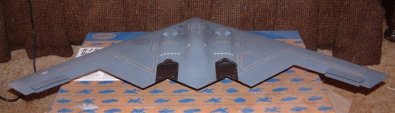
The biggest headache involved
with this kit is applying the decals. Aside from the aggravation of having
to apply 46 tiny little ”No Step” decals, most of the decals have air
bubbles under them, which I should’ve popped BEFORE treating the entire model
with Testors Dullcote. Other than that, I finished the landing gear with
Gloss White and Flat Black tires. The gear wells were finished in Gloss
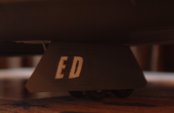
White. The “Echo Delta”, ED tail code, left over from the aircraft’s
time spent in flyable storage at Edwards AFB in California, was painted by hand,
using two home-made stencils (one for each main landing gear door). I
started with a printout of the ED tail code made on regular printer paper in
30-point italicized Impact font. Then I cut out the tail codes and taped
them to the non-sticky sides of two pieces of one inch masking tape using
regular half-inch Scotch tape. Then I used an X-acto™ knife and cut out
the letters, cutting all the way down to the plastic, and ended up with two
home-made stencils, which I then painted Gloss White. The Aircraft itself
is finished in overall Testors Model Masters Gunship Gray Spray Enamel, No.
1923, Federal Standard Color Index Number 36118. Then I added the decals
(improperly placing two of the walkway markers), and covered the whole she-bang
in Dull Cote.
|
Click on
images below to see larger images
|
|
|
 |
|
For those of you who wish to do a
better, more detailed job than I did, there are some resources that you will
find immensely helpful. The first is the book “Inside the Stealth
Bomber”, by Bill Sweetman, published by MBI Publishing Company, copyright
1999. The second is the book “B-2 Spirit in action”, by Don Greer,
copyright 2002, published by Squadron/Signal publications, part of the Aircraft
in Action series, aircraft number 178. Another far more interesting
resource is on display at the United States Air Force Museum, at
Wright-Patterson Air Force Base, Dayton, Ohio, USA. This resource is
nothing less than the ONLY B-2A Spirit (Block 10, tail number 21000, AV000)
stealth bomber on display any where in the world. It is a non-flying
structural test article that was tested to destruction, and then shipped to the
AF museum for restoration and display. The Nose Gear door claims that the
aircraft is actually AV-05, tail number 21070, then called Fire and Ice (it was
involved in the B-2’s extreme weather Climatic Test program), now named The
Spirit Of Ohio. This nose gear door was removed from The Spirit of Ohio
and placed on the displayed aircraft. The aircraft’s true tail number
can be found on the underside of the wing, just outside the left main landing
gear door.
John
|
Click on
images below to see larger images
|
|

|
|
 |
 |
|
|