|
Under Peace Marble
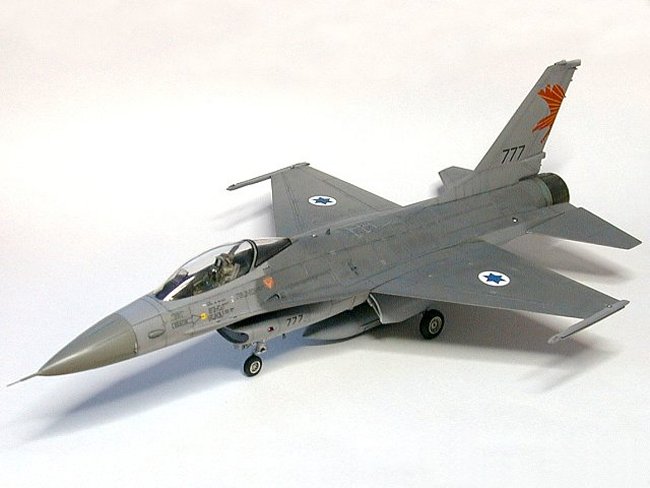
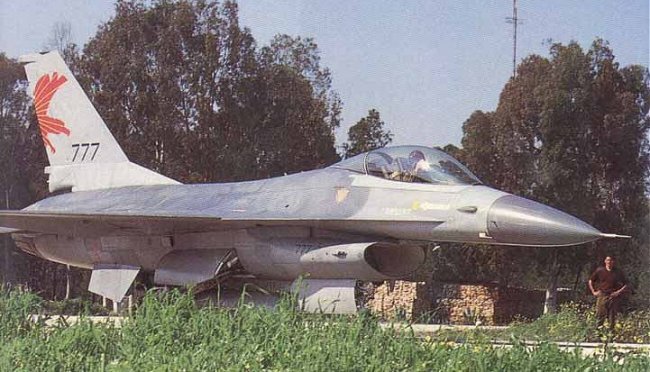
IV, America delivered surplus F-16A and F-16B Block 10 models to Israel. These
aircraft are unusual in that they initially retained their USAF style
camouflage, but received a stylised falcon on the tail denoting their
incorporation into the Phoenix Squadron. It was a photo of one of these aircraft
that I stumbled across on the net that inspired this build.
|
Click on
images below to see larger images
|
|

|
|

|
At the time this kit
was built, the beautiful rendition from Revell was not available, and neither
were the Isradecal F-16 sheets, so the Hasegawa kit was the best option
available. The kit was built according to the kit instructions with a few
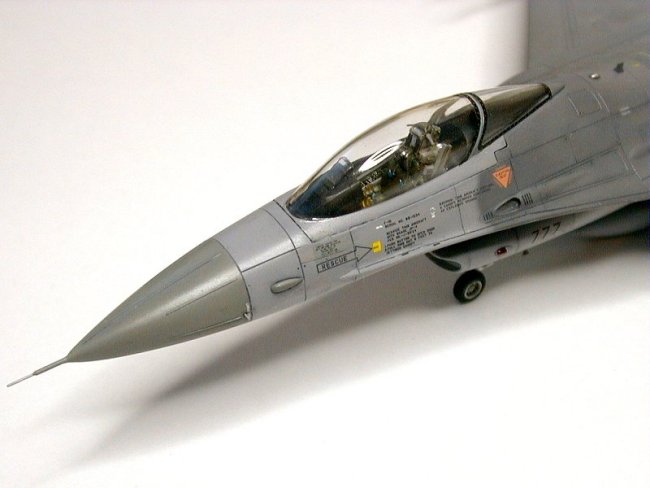
necessary changes. The kit consoles were widened using sheet styrene and the
over-simplified kit ACES ejection seat was replaced with a True Details resin
one. The kit cockpit was painted and
decalled as per kit instructions and the HUD glass sanded and polished
smooth before attaching. The cockpit was installed in the fuselage halves and
the rest of the kit assembled as per instructions.
Modifications were
necessary to backdate the kit to a Block 10 aircraft representative of a Peace
Marble IV F-16A.
-
The two small
IFF blade antennae were removed from under the nose (just behind the radome)
-
The UHF blade
antenna between the rear underfuselage strakes was reshaped and moved to the
front underside of the intake
-
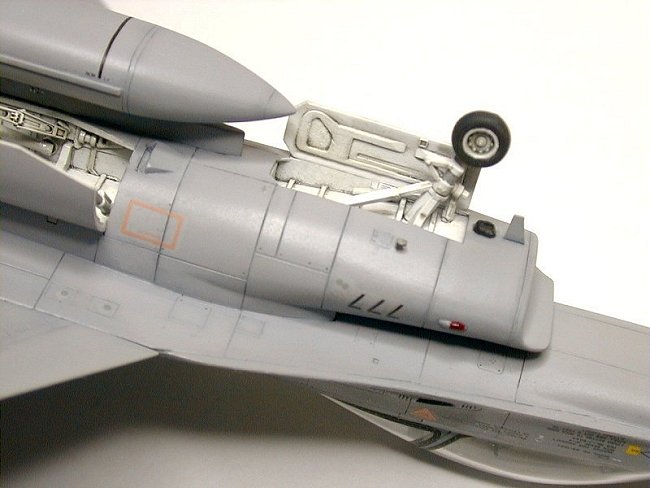
The small
avionics bump for the TACAN, just in front of the nose wheel well, was built
from styrene
-
The size and
shape of the late model tailplanes was changed to the smaller ones of the
Block 10 aircraft, by cutting and reshaping the kit ones
-
The refuelling
light fairing on the leading edge of the tail fin was removed.
-
Mounting plates
behind the intake nav lights were removed.
-
Small
temperature sensor added on the port side of the intake next to the nose
gear well.
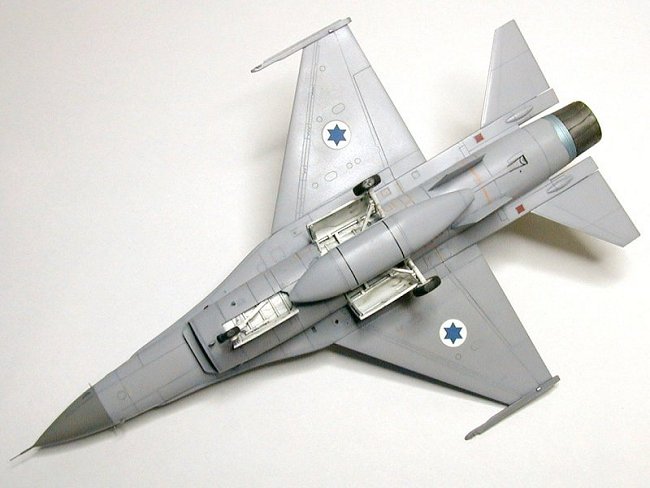
All pylon mounting holes under
the wings were filled and sanded smooth, as I wanted the aircraft clean (as this
aircraft is seen above). I added a new scratchbuilt nose probe from stretched
styrene tubing, and angle of attack sensors, from stretched sprue, either side
of the radome. A photoetched pitot was added from the spares box to replace the
overly thick kit item. The chaff/flare openings under the rear of the aircraft
were filled and sanded, as the IsraDecal F-16C/D sheet includes some very nice
decals for these items.
|
Click on
images below to see larger images
|
|

|

|
The kit was preshaded flat black,
and then painted according to the kit instructions, using Gunze Sangyo
acrylics and my Aztec A470. The only change I made was the colour of the radome;
the kit instructions suggest H307 (FS 36320), which comes out far too light, so
I used H317 (FS 36231) to make this darker. The radome colours vary considerably
depending on the age of the aircraft. The F-16's upper surface dark grey had
various shades of grey painted over top to give a worn, patchy appearance.
I used a combination IsraDecals’
F-16A/B sheet, an Aeromaster Israeli F-16 sheet, some stencilling from a
DACO F-16A sheet, and ALPS decals for the '777'on the fin and intake sides.
The
model was given a wash with Payne’s Grey oil paint before receiving a final
matt varnish.
Craig
|
Click on
images below to see larger images
|
|

|
|
|
|