|
The Canadian Car
and Foundry Cyclone
|
|
(A reverse running hurricane is
known as a cyclone.)
|
 |
Gallery
Article by Alvis 3.1 |
|
|
|
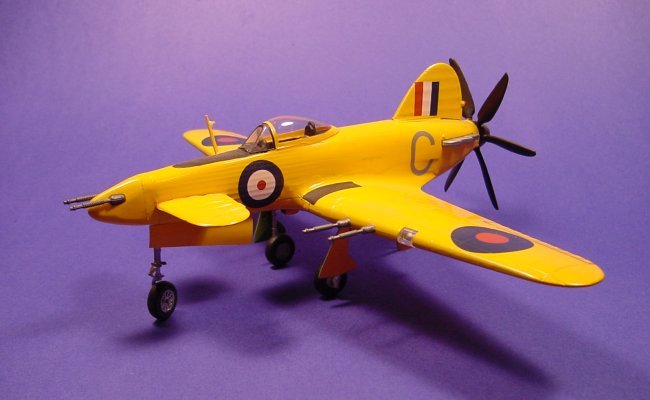
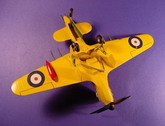
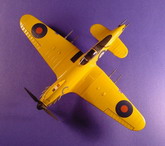
During the early war years, many
radical designs for fighters and attack planes never left the drawing board. One
that did was the Canadian car and Foundry Cyclone. A typical exercise in
Canadian compromise, the Cyclone wound up pleasing nobody.
Intended from the outset to be a
tactical support fighter for the RAF, the Cyclone incorporated several new
concepts into one aircraft. The pusher prop and nosewheel configuration gave an
excellent field of fire, and excellent ground handing properties. The canards
afforded superb maneuverability. The rugged Hurricane structure, which it was
based upon, leant a strong structure to the plane. Naturally, with all this
going for it, it also attracted attention in the US. Three prototypes were
requested, one for the USAAF, one for the USN, and one for the RAF.
|
Click on
images below to see larger images
|
|
|
The USN version was finished first,
as the USN hadn't specified any weapons capability. The initial flights went
smoothly, until September 23, 1941, when on carrier trials, the prototype hooked
the number three wire, which immediately was drawn into the propeller. Slicing
the cable, the SeaCyclone careened down the deck into six parked F4F-3 Wildcats,
destroying all seven aircraft. The Navy lost all interest in the SeaCyclone at
this point.

The USAAF got their version next.
Initial flight trials again went smoothly until the gunnery tests began. The
nose guns filled the cockpit with cordite smoke, but disastrously, the blast
from the wing guns caused the canards to deflect up, causing a massive nose-down
pitching. Had the plane been at some altitude, this may have not been a problem,
but it occurred at 300 feet , and the pilot never had a chance. The USAAF also
lost interest at this point, and the RAF cancelled their contract as well.
Canadian Car and Foundry was stuck with the last Cyclone, so naturally, they
sold it to the RCAF.
Stuck with the Cyclone, the RCAF
decided to put it to useful work by towing targets around for AA gunners to
shoot at. Unfortunately, on it's first mission, the gunner, mistaking the rear
of the plane for the front (due to the pusher prop configuration) and
"lead" the target the wrong direction. The Cyclone went down in a ball
of flames. Thus ends a chapter in Canadian aviation best left forgotten.
Alvis 3.1
|
|
|