|

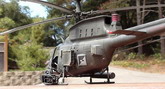
Hello ARC! Here is my MRC/Academy 1/35 scale OH-58D. The markings that came with the kit represent a bird from 4th Squadron, 17th Cavalry out of Ft. Bragg, NC. They were tasked with taking over Operation Prime Chance from the 160th SOAR in the Persian Gulf during the late 80's. Later on, the unit was reflagged as 4th Squadron, 2nd Armored Cavalry Regiment, which I was a part of from 1996-1999. I was a Black Hawk crew chief in R troop (the Black Hawk troop), and the rest of the squadron consisted of a HQ and support troop, as well as 4 OH-58D troops. I chose to build this up as my friend Jon Hulse's bird, who was a -58 crew chief with Q troop. There was a lot of good-natured sibling rivalry between the UH-60 troop and the OH-58 guys and gals, but despite the busting of each other's chops, we were all still on the same team and accomplished many great things together.
|
Click on
images below to see larger images
|
|
|
Out of the box, the kit represents an early iteration of the OH-58D. They have gone through many upgrades and modifications since they first came out so in order to build a modern, or even a late 1990's version, some work will need to be done. I wish I had paid more attention and taken more photos when I was still in 4/2 ACR, or even as I first started this kit back in the late 1990s! This kit sat nearly, but not quite, finished for over 10 years. By the time I finally got back to it and actually started to research and learn about the aircraft a year ago, the kit was past the point of no return. Now knowing all the details I had missed, I could have either trashed it or lived with it. Since times are tough and I hate waste, I just swallowed my OCD and decided to make the best of what I had already done with it.

The thing I remembered that made 4/2 ACR's Little Birds stand out was the rapid-deployment skids, which I scratch-built with brass and aluminum tubing, and a bit of tweaking to the original plastic parts. The idea behind those was that it would speed up the time it would take to deploy by aircraft - even on C-130s! The crew chiefs would fold up the stabilators, fold back the main rotor blades, the weapons pylons would fold up and the whole airframe would slide down the vertical parts of the skid supports. Those guys were fast at building their aircraft back up!
I also added seatbelts made out of wine bottle foil and then I attempted to simulate the wiring harness for each weapons pylon out of spare wire from an old car stereo. Lastly, I made custom decals to represent my buddy Jon's bird, including the airframe number (00519), his name and names of his assigned pilots, and the grey and black lo-vis cavalry box painted on the sides of the aircraft. In real life, they were very crudely painted, so after I applied the decals they looked too neat. Solution: I went over them with a brush to make them a bit sloppier. I pre-shaded with black, then applied Model Master Acryl Helo Drab, used the Acryl Clear Gloss and Solvaset for the decals, and then applied a coat of Acryl Clear Flat. I noticed the clear flat was a bit cloudy and grey in the bottle but thought nothing of it. Bad news is it went on cloudy and grey. The good news is that it actually weathered the green the way the real thing faded in real life! I went over the model in select spots with more clear flat out of my air brush, more helo drab, black and olive drab spot touch-ups( the aircraft were touched up with what ever color was on hand, which usually wasn't the original FS 34037), more clear flat, brush touch-ups with the green again (this ended up looking like oil stains - I get lucky again!) and finally dry-brushed with light greys and silvers to rough it up a bit more.
It's far from perfect and not entirely accurate, but I did have fun with it and learned a lot. If I ever build another of these, I definitely know what to do different. In fact, I will use what I learned here and apply it to when I finally continue building my 1/35 scale UH-60s, which I will customize to represent aircraft that I had worked and flown on!
CHEERS!
Ramon R. Lomeli
|
Click on
images below to see larger images
|
|
|
|
|
|