1/48
Accurate Miniatures B-25G |
|
Gallery Article by Mark L. Rossmann
on August 13 2014
|
|
|
|
|
|
|
History:
Lt. Col. Paul Gunn and a North American rep Jack Fox had been modifying B-25C’s in the SWPA, adding 50’s in side blisters, or in the nose eliminating the need for a bombardier and taking out the ventral turret which was pretty much useless and nauseating to anyone using it. Eventually this all lead up to the B-25G.
In all Ninety-seven items were fabricated at the 4th Air Depot at Townsville. With the successful mounting of a 20 MM cannon, (the B-18 Bolo was fitted with a standard Army 75 MM Field Gun to see if such a weapon could be used), were 9 feet 6 inches and weighed 900 pounds. It was successful, the fledgling B-25G had the cannon mounted in the crawlway in a cradle to absorb the shock and 21inch recoil. The cannoneer, formally the navigator, had to slam 3 inch, 15 pound shells into the breech. The weight dropped the maximum speed to 278 MPH, while adding two 50’s with 400 rounds a piece in the nose to assist in flak suppression. To reduce the weight, the lower turret was removed and the crew dropped to 3.
|
Click on
images below to see larger images
|
|
|
Later “G’s” had the “J” type side blisters added and a “50” in the tail. On typical missions, barely 4 rounds could be loaded/fired during an attack and no evasive action could be taken, which did not sit well with the crews. But the effectiveness of the “75’s” were used against varying heavy targets, including shipping, as a direct hit would sink most costal vessels, even destroyers in the cross-hairs of a flight of “G’s” were vulnerable.
In all 405 “G-1, G-5 and G-10’s were produced from May through June of 1943 at Inglewood. Kansas Cities Modification Center, they also converted 63 from the stock of existing “C’s”. More than half the “G’s” were built with the ventral turret, starting with 42-65102 the turret was not installed. One significant item changed was the pilot’s lower left windscreen, which was replaced with sheet metal to prevent the muzzle flash from blinding the pilot. This characteristic was carried into the “H” and “J” versions also.
As the war progressed, targets for the cannon dwindled and two “50’s” replaced it.
Kit:
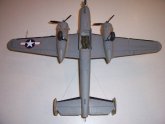
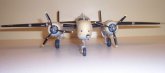
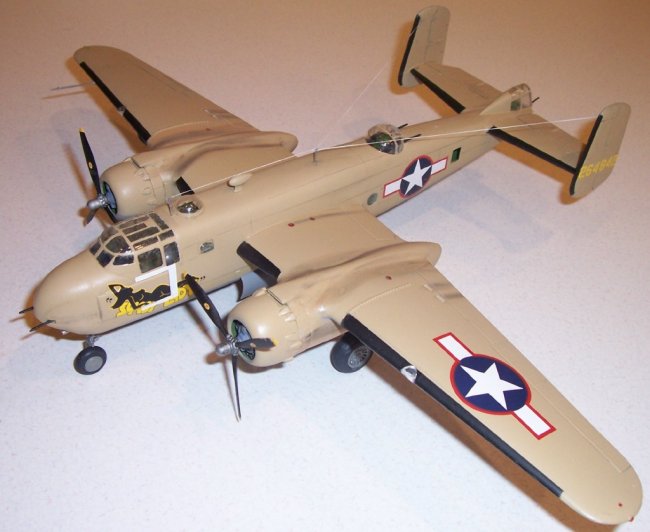
This is the Accurate Miniature Kit which I bought 6 years ago, it is well done as are the “B”, “C” and “D” versions that have been produced. It comes with interior detail that is still the mark of AM’s high quality, including the armament mounts in the nose. It’s a shame you can’t see it all. Make sure to use a lot of weights in the nose to keep it from standing on its tail. Minor filling was needed in areas; I painted the general body of the aircraft with Tamiya TS-46 Light Sand and AS-7 USAAF gray. I have now built all the versions available from AM and Monogram, and this will likely wrap up my builds of B-25’s….
Aircraft:
I located Albatros “Dragons and tigers and girls...oh my!” 8 years ago and this is my sixth build using this set. Aircraft, #5 on the sheet, “Shady Lady”; is a 310th BG/379th BS B-25G in desert colors while stationed at Oran Algeria during August and September of 1943. It has no ventral turret and a single “50” in the tail. It is noted in the instruction sheet that this aircraft was subsequently painted Mediterranean Blue, but not known if the pin-up was reapplied. The 310thBG moved to Corsica in December of “43”, but the 379th BS remained at Gamut Libya until February of “44”. 379th missions were against targets in the Dodecanese Islands, Aegean Sea and Eastern Mediterranean. It should be noted not one 379th B-25 was lost in December and not a single bomb dropped as targets were destroyed by cannon and machine gun fire.
The 379th then moved to Corsica in February joining the 428th, 380th and 381st, March the 310th joined the 57th BG, 12th Air Force which already had three other battle hardened B-25 units. In May, the 310th missions were mostly land based targets, so remaining B-25 ”G” and “H” bombers were phased out leaving war weary “C”, “D” and new silver “J” versions against the Nazi’s.